Search This Blog

Monday, November 8, 2010

Condensed Milk Biscuits

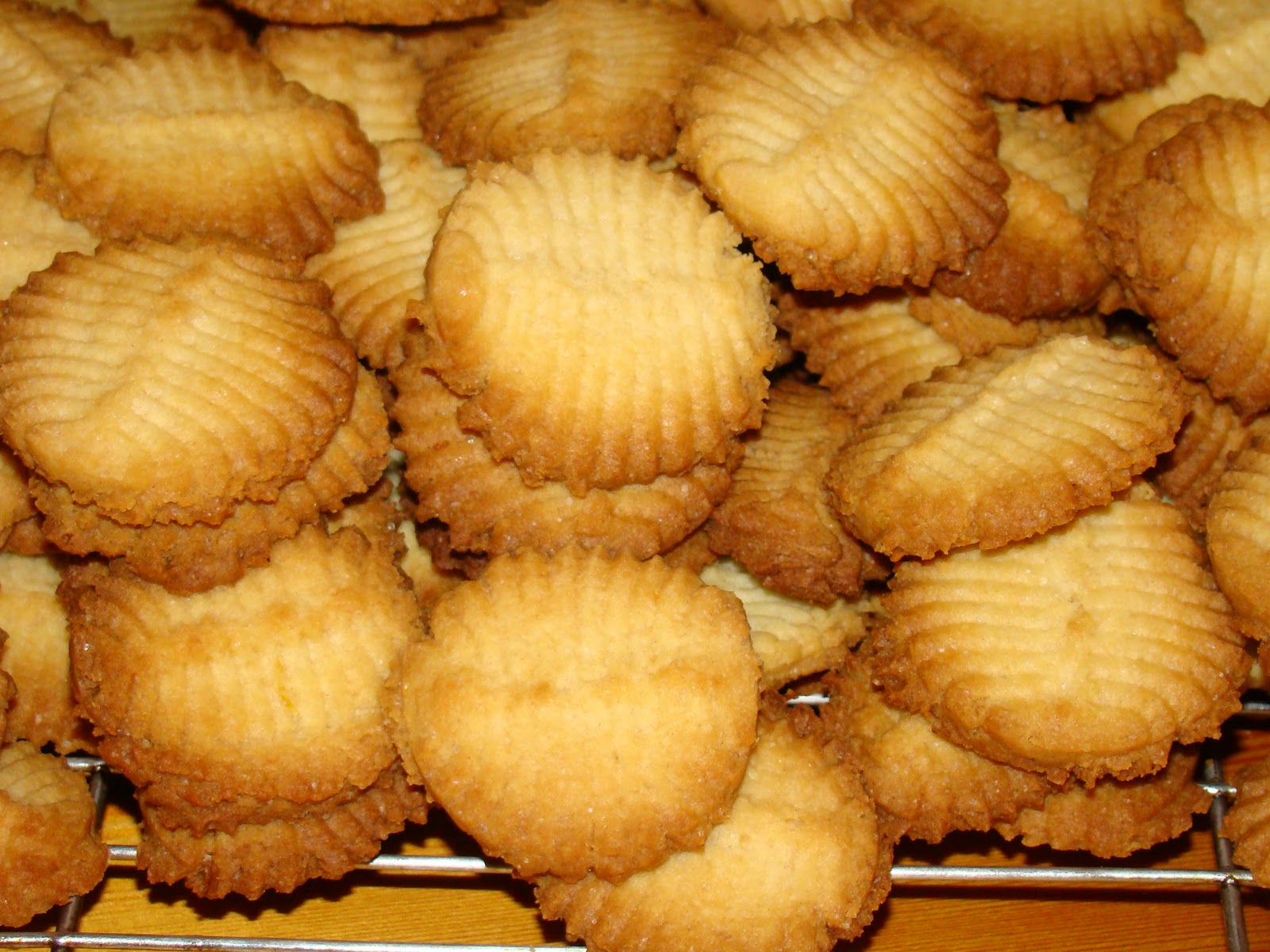
When we go camping, or traveling anywhere for that matter, I always try to bake a batch of home-made biscuits.  People seem to need something to nibble on more often when on holiday, and these crisp biscuits travel well and are delicious.  The recipe makes a big batch of biscuits. 


Condensed Milk Biscuits

5 cups of cake flour
1 cup of cornflour (Maizena)
4 tsp baking powder
pinch of salt
500 grs butter
1 cup of sugar
1 tin of condensed milk
3 Tbsps aniseed OR grated rind of 2 lemons OR glace cherries (optional)

  • Cream the butter and sugar
  • Add the condensed milk, and mix well
  • Mix together the dry ingredients, including either the aniseed or the lemon rind
  • Stir the dry ingredients into the creamed mixture
  • If the dough seems very soft, chill for 15 to 20 minutes
  • Either roll the dough out and cut with cookie cutters, or roll into little balls and squash slightly with a fork or press out with a biscuit gun

  • Place the biscuits on baking trays (decorate with cherries if you wish) and bake for 10 minutes at 180 degrees C, until slightly browned - be careful not to burn them

  • Cool on a cake rack
  • Pack into plastic jars suitable for traveling when cold.
These are really good with a cup coffee brewed on a camp-fire, perhaps sitting under a giant wild-fig tree, or watching dolphins and whales play in the sea in front of your camp site!

Monday, October 25, 2010

Aniseed Rusks

I haven’t been posting regularly since we haven’t been camping much this year, but as the year draws to a close, my thoughts turn to holidays and food. Absolute bliss, I can’t wait to pack our caravan and head out into the fresh air for some peace and quiet.

As we usually camp somewhere remote, I have to plan our meals carefully, and take everything along. (For more on planning meals, please look HERE). I do a lot of baking before we go, to make sure that there is plenty to snack on – somehow, being in the open air, and getting lots of exercise, makes one so much hungrier!

I always bake a batch of rusks to take with. Rusks are a South African tradition, a sweet bread-dough, formed into little balls and baked in a loaf tin, then separated, and dried out over-night in a low oven. The crisp, sweet rusks are absolutely delicious dunked into a cup of coffee, or tea, and make an excellent quick breakfast.

Rusks come in many variations - I am sharing my mother's recipe, which she got from her mother. It’s easier than most recipes, being made with self-raising flour, not yeast. Rusks are often made with buttermilk or muesli, too.

This batch is a classic aniseed rusk, another firm favourite in SA, and my favourite too.  If you don't like aniseed, leave it out.


Aniseed Rusks

3 x 500 grs packets self-raising flour
1 dsp salt
250 grs butter
1 1/2 cups sugar
2 + 1 cups of milk
3 eggs
2 or 3 tbsps aniseed
  • Mix together the flour and salt, rub in the butter.
  • Dissolve the sugar in 2 cups of milk (set the other cup of milk aside, to use if your mixture is too dry).
  • Cool the milk mix to luke-warm.
  • Whisk the eggs, beat into the milk and sugar.
  • Stir the milk mixture into the flour with a wooden spoon, adding extra milk if needed.
  • Turn out onto a floured surface, knead very well, at least 150 times! until smooth and elastic (even though it’s not a yeast mixture, this step is necessary).
  • Squeeze off balls of dough, tuck them into greased pans (the batch will fill 3 loaf tins)


  • Bake at 180˚C until well-risen and golden brown.

  • Turn out onto cake racks, cool until you can comfortably handle the loaves.

  • Very gently ease the rusks apart, and lay out onto your oven racks to dry.
  • Dry out for at least 12 hours at a very low heat, 50˚C, leaving the oven open a crack to allow air to circulate.

I usually pack the rusks in the oven at night, and leave them until morning, then turn the oven off and leave them to cool completely. Test them the next morning (have one with a cup of coffee!) or break it in half to make sure they are dried out right through. When they are completely cold, pack them into air-tight containers, they will keep several weeks.


Rusks are delicious dunked in an early-morning cup of coffee, especially when you are camping, or as an afternoon snack.

Happy camping!

Friday, June 11, 2010

Friday Photos

Today I am sharing a few of my favourite photos, taken on our trip to the UK in 2007.  England is incredibly beautiful, and I especially enjoyed the flowers and gardens.  Hope you enjoy these.


Have a wonderful weekend!

Tuesday, June 8, 2010

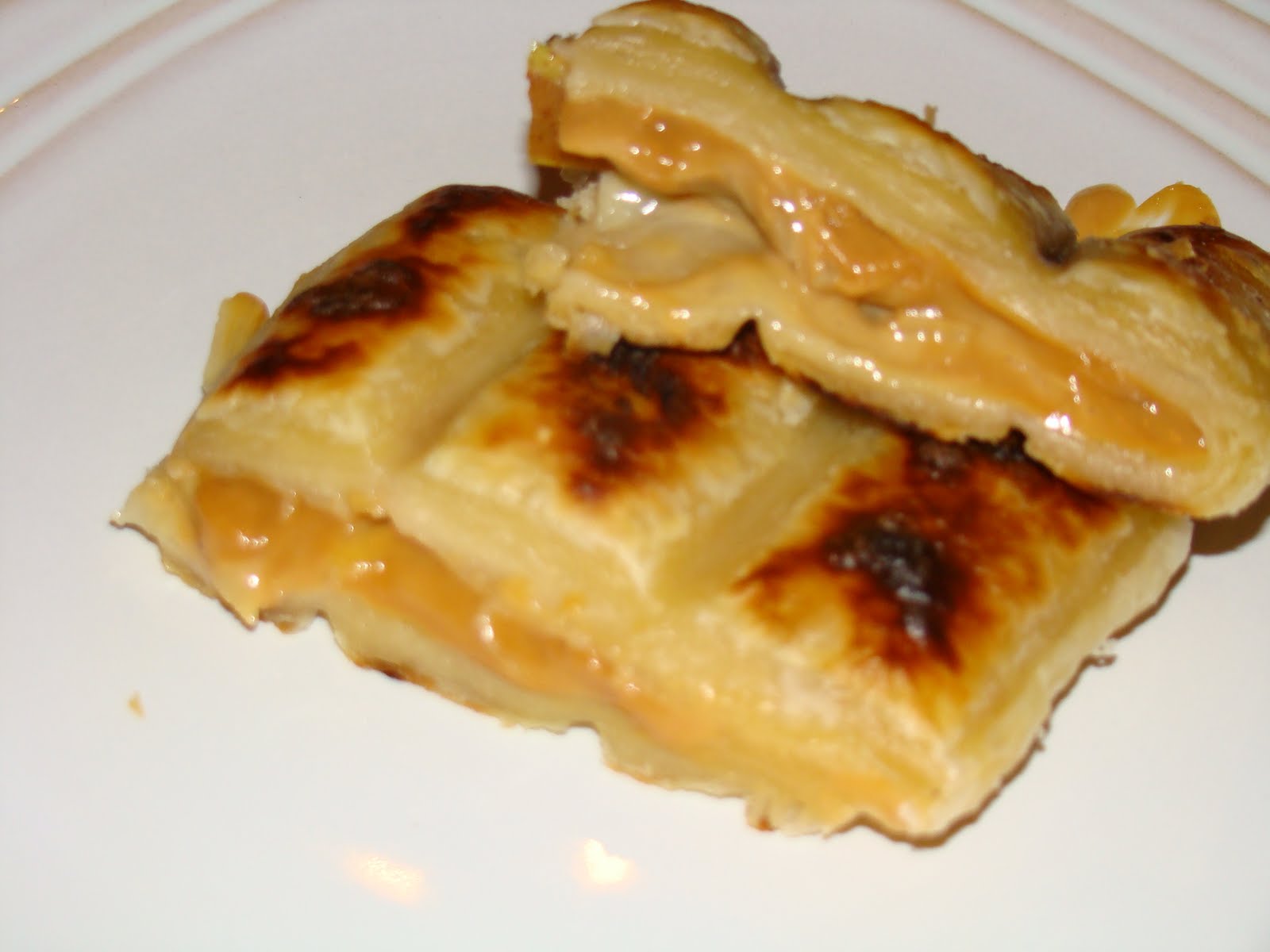
Pear, Almond & Caramel Braai Pie

Here's an interesting dessert to make next time you are camping. It doesn't need much in the way of ingredients, the trickiest one being the frozen puff pastry, but that won't take up much room in the cooler box!


Pear, Almond & Caramel Braai Pie

lightly oil a braai grid, for cooking your pie over the coals


1 packet of puff pastry, completely defrosted
1 small handful of almonds
1/2 tin of Caramel treat (caramelised condensed milk)
1 ripe pear or a few tinned pear halves

  • Roll out the pastry (a wine bottle will do nicely as a rolling pin)
  • Spread the caramel treat over one half, leaving a border for crimping
  • Sprinkle with a handful of almonds
  • Layer on thinly sliced pear
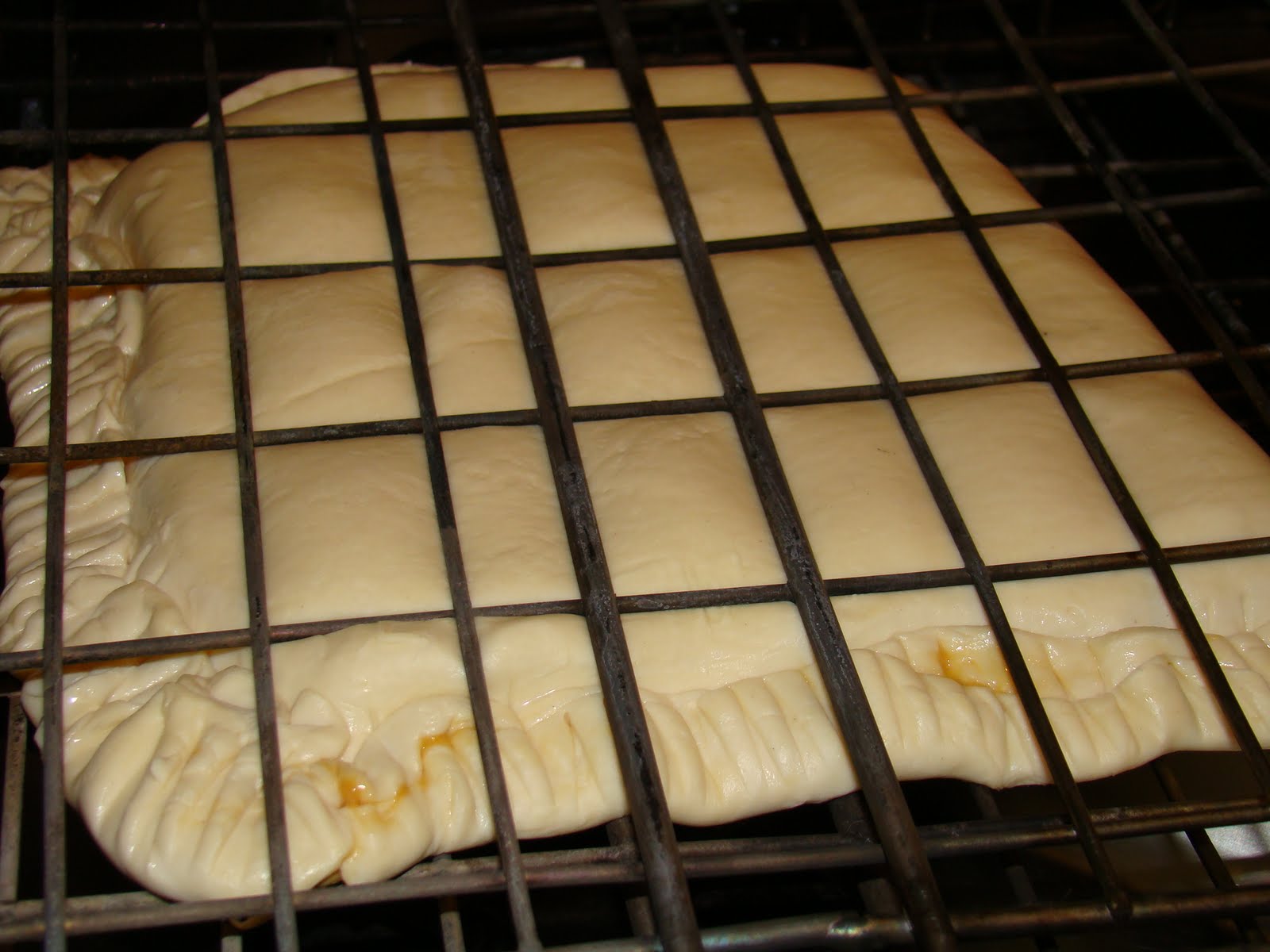
  • Fold the plain half of the pastry over the filling,  smear with a little milk around the edges, and seal well.
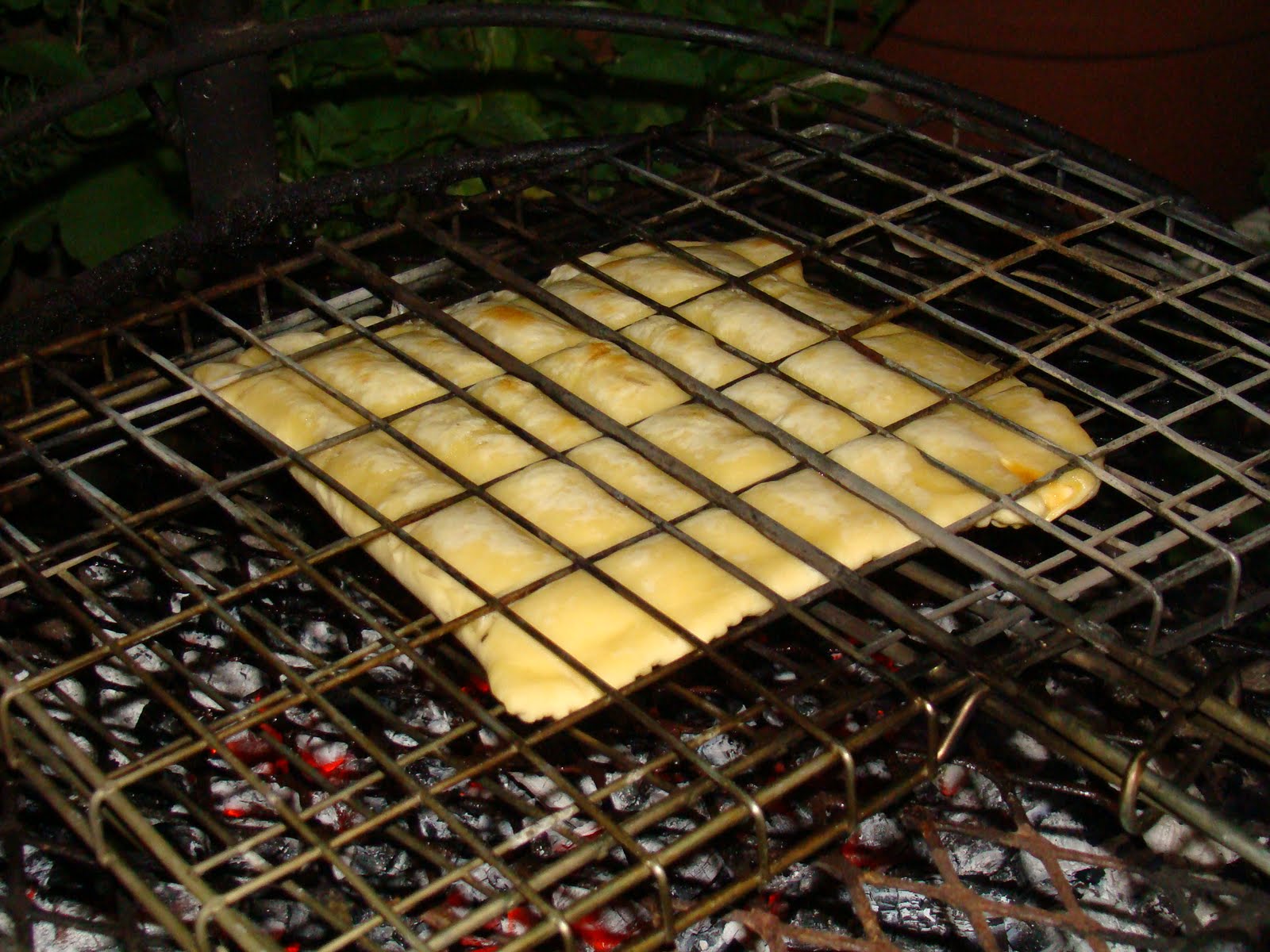
  • Gently lift the dough onto the braai grid, and close and lock it
  • Bake over very hot coals, turning frequently until crisp and puffed and golden


Slice and enjoy!

This method would work really well for a camping lunch-time, too - sprinkle with grated cheese, left-over braai meat, or a tin of something yummy, and cook a pie for lunch on the fire.

Let me know what you come up with!

Friday, June 4, 2010

Friday Photos

Yesterday I told you a little about Maphelane, the beautiful beach and forest, and the creatures.  Today, let me show you!  This Friday's photos are all of that area, I hope you enjoy them.....

the beach and forested sand dune


such a perfect beach


looking away from the forest dune


ghost crab at sunset


and ghost ships on the horizon


suppertime visitors - a very tame bushbaby


the dune forests


the view from the top of the dune on the beach


have a wonderful weekend!

Thursday, June 3, 2010

Camping at Maphelane

Maphelane is a beach camp on the far north coast of Kwazulu-Natal.  It is part of the St Lucia wetlands and coastal forest area, and the dune forests and beaches are so beautiful.  It is however, very wild and remote.

This area is a popular holiday destination, especially with fishermen, but it certainly isn't luxurious, actually, the word 'rustic' is complimentary!

The first time we went there we stayed in one of the slightly ramshackle wooden cabins, which was comfortable, but the camp caretakers were fighting a losing battle against the cabins being re-claimed by the forest - everything living, plant and animal, was trying to move in. There's a LOT of life in an African tropical coastal forest.

We went for a walk to the campsite one day, and I fell in love with camp number 33.  The campsite is situated on a long sandy corridor, stretching back into the forest from the beach. The very last site, number 33,  is tucked into the dune forest, and is so beautiful, that I started planning to camp there.

I had to wait until we had a 4x4, though - the road through the forest over the dune (read 'mountain') is impossible for a caravan without a 4x4 vehicle - sandy, hairpin bends, steep inclines, it's quite a road.

We finally got to camp there last January.  The campsite was as beautiful as I remembered, the ablutions were spotlessly clean and well-maintained, the beach magnificent - the biggest drawback is the camp water.

We knew there was no electricity, this is after all a very remote area, and with a gas fridge and freezer we were fine.  The camp runs a generator (far from the campsite) from 6 am to 10 pm to provide some power, so we hired a plug point at the workshops, and took along a small electric fridge.  This, of course, was for the beers......

But - Maphelane does not have drinking water.  There are rainwater tanks, and the water can be drunk (after treatment), but we brought along our own fresh water.  Trouble is, the water for washing in the kitchen and ablutions is all ground water, and it was brown - literally brown, and slightly sticky, as it was brackish water. High salt and soil content - and this is all that is available for washing dishes and yourself.  By the end of the week, we were all longing for clean, fresh water showers!

Camping in the forest was wonderful, the bush is alive with creatures.  Bird life is prolific - some good sightings were a woodland kingfisher, and the rare palm-nut vulture. Masses of butterflies, and regular visits from the local troupe of vervet monkeys by day and bushbabies by night entertained us.  Vervet monkeys are very cunning thieves, always on the look-out for a meal.  They can do a lot of damage, so one needs to be on the watch when they come around.  Everything needs to be strapped and locked down when one leaves camp.

The bushbabies were so cute, I didn't know they could get so tame. One little chap made a pest of himself, wondering around between our feet in the evenings like a little cat.  We were careful not to try pet it - after all, it was a wild creature.  Bushbabies have a loud cry which can be really alarming, they sound for the world like a baby lost and in distress!  And they are loud!

It was a wonderful camp, but we won't be in a hurry to go back - the road took our caravan apart and Andre is having to re-build bits of it.  I'll put some photos up to show how beautiful this place is tomorrow!

Til next time....

Friday, May 28, 2010

Friday Photos

I'd like to share some holiday and/or interesting photos with you each Friday. 

To start with, 'they' say one should get to know your own area first before you start to travel.  Well, in 2008 I gave my husband a flying lesson as an anniversary gift - I went along to take photos (scariest thing I ever did, flying in that small plane - and I like flying).

These are photos of our city Pietermaritzburg, taken on a dusty winter's day.  I hope you enjoy them!

The plane


 Take off


The city 


Midmar Dam in the distance 


The Quarry 


 Turning back towards the airport


 The city again


 Nearly on the ground again


Have a wonderful weekend!

Tuesday, May 25, 2010

Spicy Pork Braai Packet

Right - time to get to cooking on the fire!

Here is a favourite dish that we cook on the fire often, and it's a good example of the type of food we cook when camping - a pack of vegetables and meat, cooked in a tinfoil packet until tender, moist and full of flavour.  This method is very open to experimentation,  and I find each time I make it, it comes out a little different.  Also, clean-up afterwards is minimal!

On the menu were some pork neck chops, and instead of doing the usual braaied chops, with potatoes in foil and a salad, I decided that an all-in-one tinfoil pack would be good.  Inspired by stir fry-type flavours, I added all sorts of ingredients and in the end we had one of the most delicious packs ever. 


Spicy Pork Braai Packet

4 pork neck chops, bones removed and cut into strips
Marinade:
3 Tbsps soy sauce
1 Tbsp Worcester sauce
1 tsp English mustard
1 tsp ground ginger
1 tsp ground cinnamon
1 tsp turmeric
1 tsp paprika
Vegetables:
1 large onion, sliced
3 medium potatoes, sliced
4 carrots, julienned
1/4 head of broccoli, broken into florets
large handful of button mushrooms, sliced
1 red chili, sliced
olive oil
butter


  • Mix the marinade ingredients very well, and work through the meat strips, making sure that they are well coated
  • Prepare all the vegetables, then layer them in your tinfoil roasting dish
  • Start with the onion, and drizzle a little olive oil over them
  • Next layer the potatoes, the carrots, the broccoli, then add a few dollops of butter
  • Lastly layer on the meat, chili, and mushrooms
  • Now make a lid of tinfoil, and seal the packet rim very well - this is important, as it will keep all the juices in, and steam the food until the flavours are mingled and delicious


Place over hot coals on the braai grid, and allow the heat to puff the packet up.  It should take about an hour to cook. Watch the packet, while there are small jets of steam escaping, there is still moisture inside. When the steam stops, your packet is done.


Remove from the fire, tear open and serve - the flavours have to be tasted to be believed, and the chillies add a lovely fresh bite.

Enjoy!

Thursday, May 20, 2010

Why Camp?

When people ask why we like to camp so much, I am sometimes stumped for an answer! The biggest objection to camping usually is that one has to share a communal bathroom, and ablution blocks can be grim. But think how little time is actually spent in the bathroom, compared to time spent at your campsite, or doing adventurous things in the outdoors, and it's worth the sacrifice!

Of course, the main advantage of camping is the cost - it is way cheaper than accommodation, even self-catering, and there's just no comparison when one thinks of the cost of hotels.  For me though, there are other advantages to camping.  We have a small easy-to-tow caravan, which serves as bedroom, packing space and a sitting/dining area.  It has a large tent, which is easy to set up, and this doubles our living space and gives us a dry sheltered area.

This is our holiday home, and we get to park it in a different place each time we go camping!  It's always equipped with our own bed, and linen, and kitchen equipment, but the location changes all the time - sometimes it's a camp (or two) in the Kruger Park, where hyenas patrol the camp fence, eyeing out your dinner through the mesh. Then it may be a few days at Mahai, in the crisp mountain air of the Drakensberg, or perched on a dune overlooking the Indian Ocean, watching thunderstorms out at sea, or dolphins vaulting out of the waves. Next it may be on the banks of the Umkomaas River, under a fig tree large enough to park four caravans, with room to spare, or in the dune forests of Northern Kwazulunatal, with a bushbaby climbing down the tent poles to fetch some grapes you have dropped!  The options are endless.......South Africa is perfect for camping.


I find when we do stay in accommodation, that I spend longer packing everything into bags and boxes, than I spend packing into my caravan's cupboards. Then when we arrive at the accommodation, one has to unpack, and then pack up again to go home, and unpack at home!  With the caravan, I pack in before we leave, and unpack when I get home.  Much easier, I think.  I also avoid the cleaning that one sometimes has to do when staying in accommodation that is less than well cared for......

With a caravan, I also get to sleep in my own bed....without thinking about how many people have slept on the pillow and under the duvet I will be using that night...fussy, I know, but that's me. I also never have to deal with a lingering cigarette smell - an anathema to any non-smoker!

So that's some of my reasons for loving camping.  But there's more to it than that - there's the pleasure of being able to be comfortable in remote areas, the satisfaction of living well without any modern appliances, or even electricity.  The pleasure of sitting quietly outside your caravan as buck or birds or other creatures wander nearby, gives a quiet kind of joy.  What do you think?


For a good camping guide and list of camp-sites, please check out this web-site:  Caravan and Outdoor Life Magazine

Friday, May 14, 2010

Planning food for a trip

Right, you've decided that you want to go camping, maybe touring a bit, or staying somewhere remote. Your destination has been decided, bookings made - now - how to plan what to eat.

A lot depends on whether you will have access to shops or not, and also if your camp-site has power, for a fridge.  We generally prefer to be far from towns and to camp without power.

Your fridge arrangements are important, as this will affect what and how you pack. We have a caravan, with a small built-in 3-way fridge, which is ideal. Portable gas fridge/freezers work well, too.  But most camp-sites have a small office, and have ice available to buy, so you can get by with a cooler box (or three:  one for frozen items, like meat, seldom opened;  one for fresh items, like butter, cheese and veggies, which should all be packed into sealable containers, or they end up soaked and floating, and one cooler box dedicated to the booze, haha).  Pack each day's meat into a second packet, seal it well, and write on it the day you plan to eat it with a waterproof marker - this will help no end when you are digging around at the bottom of a cooler box or gas freezer!

I usually start by thinking in terms of  'meals'. Work out how many of each you will need, then jot down ideas.  This will help you decide what to buy and pack.  Here are some of my ideas, tried and tested...

For breakfasts, I usually pack home-made rusks.  We always take along filter coffee - we make it in a stainless steel tea-pot - poured through a fine tea-strainer, it makes a good cup of coffee! This with a rusk or two is usually enough for breakfasts, but sometimes, something else is nice, so pack yoghurt, muesli and maybe some eggs and bacon for the occasional fry-up.  Nothing smells as good as bacon frying in a pan on the fire early in the morning when you are in the bush! 

For lunches, I like to bake a home-made bread. Try this wonderful recipe for an easily-made brown seed loaf, which we bake on the fire in a cast-iron pot.  This with a selection of cheeses, pickles, olives, tinned smoked oysters, and maybe cold meats, all washed down with chilled white wine or a beer, eaten outside under the trees, is SO delicious!  Or pack some crackers to go with your snacks, and don't forget the honey/jam/chocolate spread.  On our last trip, one of the days was quite chilly, so we made a delicious rustic vegeteable soup, on the fire. 

But dinners are where camping comes into its own.....as the sun sets, and twilight deepens, it's time to light the paraffin lamps and hang them from the trees around your camp.  Then light your fire, sit back with your sundowner of choice and watch the flames for a while.  Remember camping is all about getting back in touch with nature, and the outdoors, making do without modern appliances, and letting your body, mind and soul regain some peace.

Now dinners, cooked on the fire, have endless possiblities.  If the evening is cool, a fragrant stew cooked in a Dutch Oven on the fire, served with rice or bread, is wonderful.  If the evening is hot, then a juicy steak, marinaded in some olive oil and lemon juice, and cooked to rare perfection over the coals, with a green salad, is just right.  Or pork chops, sausages, sosaties, chicken pieces, curry, chicken a la king, coq au vin.....let your imagination go wild.  Just about anything can be cooked on a fire, including pudding!

Don't forget to pack some snacks - crisps, nuts, biltong, and so on, to go with drinks, and cake or biscuits to go with coffee or tea.  Think of each day you will be camping, and try to plan what you will eat on each of those days. Oh - and don't forget to take your lists with!

You'll be out in the open, in the fresh air, going for long walks in the mountains or on the beach, or in the forests, which will make you hungry, so be prepared.  Camp food should not be about survival only - it should be part of the experience.  Preparing food in an outdoor kitchen is fun!

Any other ideas/tips??  Or questions? I'd love to hear from you!

Tuesday, May 11, 2010

Camping in South Africa

I have been camping most of my life, first with my family in Zambia and Zimbabwe where I grew up, then as an adult with a family of my own, in South Africa.

South Africa has to be one of the best countries for camping!  For starters, the weather is generally sunny and beautiful.  SA also has such an array of amazing things to see, and an excellent network of spacious roads which makes traveling easy, so it's the ideal country for touring.

We have traveled all over SA, from beaches on three sides of the country to game reserves where you can see the Big 5, to incredible mountains and viewpoints, to tropical dune forests, deserts, cave systems, wild-flower displays in spring, wine farms and modern cities - SA has it all and more, and we've tried to see most of it.

We live in Kwazulunatal, and most of our trips are in this province.  Just recently we stayed at a place called Highover, on the banks of the Umkomaas River, in the Hella Hella Valley.  This is a wonderfully wild, rustic campsite, with incredible bird life, and a peacefulness that is good for one's soul. 

I love cooking on a camp fire, so I'll be sharing plenty of recipes with you, and also ideas on camp kitchens and equipment, how to plan, what to eat and how to cook it.  We don't believe in survival type food when camping, since 'gourmet' is so much nicer!

I would love you to comment or ask questions - looking forward to hearing from you.

Saturday, May 1, 2010

Hello world!

Hi and thanks for stopping by! 

I have been writing a food-blog at http://blogs.food24.com/Zabwan since January this year, and love it, but I would like to write about more than just food.  I am passionate about camping too, and have lots of tips and experiences to share.

So please do come back for recipes, memories, camp-site reviews, camping tips, and whatever else is of interest!

See you soon.....